Top Contract Templates For Video Game Sync Licensing
Need a reliable sync licensing contract for your video game? This guide breaks down three popular options – OnlineMusicContracts.Com, LegalZoom, and RocketLawyer – based on cost, flexibility, and legal coverage.
Key Takeaways:
- OnlineMusicContracts.Com: Previously offered affordable, editable templates ($14.99 each) but is no longer operational as of December 11, 2025.
- LegalZoom: Provides guided, auto-generated contracts ($40–$100+ per document) with optional legal consultations, but lacks flexibility for detailed editing.
- RocketLawyer: Offers fully editable templates and attorney Q&A support through a $39.99/month subscription or $20–$40 per document.
Quick Overview:
- OnlineMusicContracts.Com: Focused on music-to-visual sync; ideal for small studios before closure.
- LegalZoom: Simplifies contract creation but may require extra editing for gaming-specific needs.
- RocketLawyer: Best for ongoing licensing needs with added attorney support.
Bottom Line: Choose based on your project’s complexity, budget, and need for customization. For high-value or complex deals, consult an entertainment lawyer.
1. OnlineMusicContracts.Com
OnlineMusicContracts.Com offers over 100 downloadable contract templates tailored for professionals in music, photography, and digital industries. These templates are drafted by attorneys and available for just $14.99 each. Compare that to the typical cost of hiring a U.S.-based attorney, which can range from $300 to $1,000 – a significant difference, especially for indie game developers and composers managing multiple small licensing agreements annually. These templates provide an affordable way to establish solid sync licensing agreements.
Coverage of Rights
The templates cover both synchronization rights (using a musical composition alongside game visuals) and master use rights (using a specific sound recording). They allow users to define key terms like territory (global or regional), duration (limited years or perpetual), and usage across platforms like PC, console, mobile, and VR. They also address additional scenarios such as DLCs, patches, and sequels, with options to either extend the license automatically or renegotiate terms. Since game music often features in Twitch streams, YouTube videos, and esports broadcasts, the templates can be customized to include public performance rights and user-generated content clauses. This adaptability ensures the agreements align with the unique and evolving needs of video game projects.
Customization Options
These templates are provided as fully editable documents (usually in Word format), making it easy to adjust key details like upfront sync fees, royalty percentages, and payment schedules to suit various budgets. Users can choose between exclusive or non-exclusive rights, opt for flat-fee buyouts, or create hybrid models with backend royalties. There’s even room for escalating royalty structures tied to sales or revenue milestones. To guide non-lawyers, the templates include clear drafting notes, ensuring critical elements like scope, term, and indemnification clauses aren’t overlooked.
Affordability
Once purchased, a single template can be reused and adapted across multiple licensing deals for different games and platforms, dramatically lowering the legal cost per agreement. A small studio, for instance, could invest in a core set of templates – such as sync license, master use license, and composer agreement – and create standardized terms for its projects. This approach allows studios to reserve expensive attorney reviews for only the most complex or high-value deals, saving both time and money.
2. Pre-Made Sync Licensing Templates by LegalZoom

LegalZoom has been a go-to resource for over 4 million small businesses since 2001, providing attorney-drafted contracts through a guided questionnaire system. Their music and synchronization license agreement templates are designed to cover a range of uses, including video games, films, TV, and online content. During the document creation process, you can specify the intended scope of use, tailoring the contract to your needs. However, unlike fully editable Word documents, LegalZoom’s approach relies on a Q&A system that auto-generates the contract. While this makes it user-friendly, it limits flexibility when it comes to making detailed, clause-by-clause edits.
Coverage of Rights
LegalZoom’s template system prompts you to define key parameters like synchronization rights, territory, and terms during setup. However, it may not automatically account for specific scenarios in gaming, such as DLC, patches, esports broadcasts, or streaming. To address this, you’ll need to specify the "scope of use" during the setup process. For instance, experts recommend including language in the contract that explicitly allows gameplay footage to be captured and streamed without additional fees. This precaution can help avoid takedown disputes in the future. While the system is affordable and easy to use, it might require extra attention to ensure it aligns with the unique needs of video game projects.
Customization Options
The questionnaire format allows you to adjust elements like party names, song titles, territory, duration, and fee structures. However, you’re limited to LegalZoom’s predefined fields rather than having the freedom to edit the document entirely. For video game projects, it’s crucial to specify "interactive video games and apps" in the media clause and clarify whether the license includes promotional trailers in addition to in-game use. The system also allows you to set a flat sync fee in USD or include royalty terms. If you’re managing multiple contracts, you can reuse previous responses to save time. These features help address essential legal elements like scope, term, and fee structures, which are critical for video game sync licensing.
Affordability
LegalZoom’s structured process also impacts its pricing. Individual contracts typically cost $40 to $100+, or you can opt for a monthly subscription plan that includes access to their template library and attorney consultations. This pricing is far more affordable than hiring a U.S. entertainment lawyer, who might charge $250–$500 per hour for drafting a custom agreement. While the guided process is cost-effective, the trade-off is that these templates may overlook game-specific complexities, such as revenue-sharing arrangements or high-value deals. In such cases, additional legal review might be necessary to ensure the contract fully meets your needs.
3. Customizable Sync Contracts from RocketLawyer

RocketLawyer offers a practical solution for video game projects needing sync licensing agreements, tailored to meet specific needs. As an online contract workspace, it provides fully editable sync license templates that can be accessed through a monthly membership costing $39.99 or via one-time fees ranging from $20 to $40. Membership perks include access to the entire library of contracts, secure document storage, and legal Q&A support with attorneys. This level of flexibility makes RocketLawyer stand out compared to other less adaptable options.
Coverage of Rights
The platform’s base template can be adjusted to cover synchronization rights for various elements, including in-game visuals, cutscenes, trailers, and user interface elements. It also accommodates master-use rights for specific recordings. Users can define the scope of usage for background music, menus, downloadable content, expansions, and marketing materials like trailers and esports broadcasts. Additionally, the contract can address gameplay streaming on platforms like Twitch and YouTube, while clarifying whether the license extends to future remasters, platform ports, or live-service updates. RocketLawyer’s plain-English explanations make complex terms like rights and indemnification easier to understand, but users should ensure the inclusion of game-specific provisions that the default template may not cover.
Customization Options
RocketLawyer’s editable templates allow developers to create agreements suited to different game scenarios. For example, an indie PC release on Steam might require non-exclusive rights with a 10-year term limited to PC platforms. On the other hand, a mobile free-to-play game could benefit from provisions addressing in-app ads, rewarded videos, and ongoing updates, with a perpetual term to reflect the game’s evolving nature. Contracts can be downloaded in Word or PDF formats and signed electronically, streamlining remote negotiations. Once finalized, the customized agreement can be saved as a template for future use, enabling developers to manage legal costs efficiently across multiple releases.
Affordability
RocketLawyer’s pricing structure offers a budget-friendly alternative to hiring U.S. entertainment attorneys, who typically charge $300–$600 per hour to draft custom sync agreements. The subscription model is particularly advantageous for studios requiring multiple agreements, such as sync licenses, work-for-hire contracts, and contractor agreements, throughout the year. Meanwhile, the single-document option is ideal for composers or small teams handling just a few licensing deals. With user ratings averaging between 4.3 and 4.7 out of 5, RocketLawyer is praised for its affordability and ease of use. Its templates are designed with U.S. legal standards, spelling, and currency in mind, making it a practical choice for game studios and licensors based in the United States.
sbb-itb-593c37e
Pros and Cons
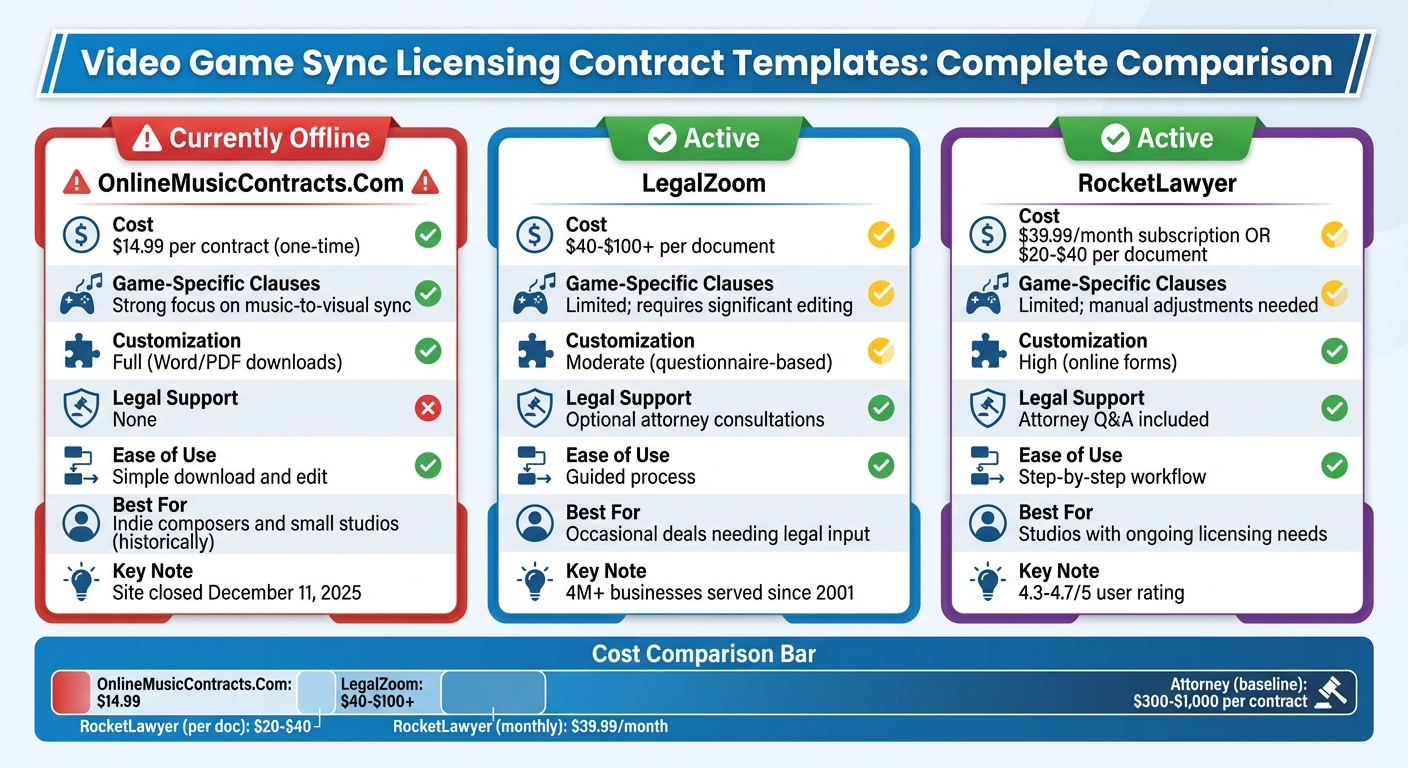
Video Game Sync Licensing Contract Templates Comparison: Cost, Features, and Best Use Cases
After reviewing the individual templates, let’s break down their strengths and weaknesses. By comparing factors like cost, customization options, legal support, and suitability for video game-specific needs, we can better understand which contract option works best for video game sync licensing.
OnlineMusicContracts.Com
OnlineMusicContracts.Com previously offered affordable, music-focused sync and master use templates. Each contract was priced at $14.99 and came in editable Word and PDF formats, making them easy to customize. The platform focused on music-to-visual scenarios, making it appealing for video game projects. However, as of December 11, 2025, the site is no longer operational [1], so its templates are no longer available. Additionally, it lacked built-in legal support or tools for managing contracts, meaning users working on complex projects often needed to hire outside legal help.
LegalZoom
LegalZoom provides attorney-drafted templates and offers optional legal consultations. However, its templates tend to be generic intellectual property licenses rather than being specifically designed for video game sync licensing. This means users often need to make significant edits to tailor them for gaming projects. The platform’s per-document pricing can also become costly for studios managing multiple tracks across different games.
RocketLawyer
RocketLawyer offers customizable sync contracts through a subscription model. Its membership includes features like e-signatures, document storage, and attorney Q&A support. The templates are editable, allowing developers to adapt them for various gaming scenarios, such as non-exclusive licenses for PC games or contracts for mobile games with in-app ads. However, the base templates use generic language, which may not fully address game-specific needs like adaptive scores, mod support, or royalties for long-term streaming. Additionally, the $39.99 monthly subscription may not be ideal for solo composers or small indie teams with limited licensing needs.
| Criteria | OnlineMusicContracts.Com | LegalZoom | RocketLawyer |
|---|---|---|---|
| Cost | $14.99 per contract (one-time); currently offline [1] | Per-document fees | $39.99/month subscription |
| Game-Specific Clauses | Strong focus on music-to-visual sync licensing | Limited; requires significant editing | Limited; manual adjustments needed |
| Customization | Full customization via Word/PDF downloads (historically) | Moderate customization via online wizard | High customization through online forms |
| Legal Support | None | Optional attorney consultations | Attorney Q&A support included |
| Ease of Use | Simple download and edit (historically unavailable) | Guided, questionnaire-based process | Step-by-step workflow |
| Best For | Indie composers and small studios (historically); currently unavailable | Occasional deals needing legal input | Studios with ongoing licensing needs |
This comparison highlights how each option aligns with the specific demands of video game sync licensing, helping users choose the right solution for their needs.
Conclusion
After exploring the key factors in our comparison – affordability, legal thoroughness, and ease of use – it’s clear that your choice should align with the scale and complexity of your project.
For indie developers working on smaller games, affordability and simplicity are essential. Options like budget-friendly bundles (around $97.00 for 17+ editable templates) provide a practical solution. These templates offer straightforward, all-platform rights without recurring fees, making them ideal for simpler agreements that require global, perpetual rights.
Composers and producers managing their own catalogs need contracts that go beyond basic IP licenses. Templates designed specifically for music licensing can help protect ownership, separate composition from master rights, and address both upfront payments and backend royalties from game sales, DLC, or streaming. If you’re handling high-value deals – like licensing popular commercial tracks or structuring revenue shares tied to microtransactions – consulting a U.S. entertainment or games attorney is a smart move to avoid costly errors.
For publishers and larger studios juggling multiple titles, efficiency is key. Legal workflows with features like e-signatures, version control, and automated reminders can save time and reduce risk. Since most U.S. game sync deals specify fees in U.S. dollars (USD) and cover major platforms, make sure your templates clearly outline these terms to prevent misunderstandings.
FAQs
What should I know about choosing the right contract for video game sync licensing?
When choosing a contract for video game sync licensing, it’s important to prioritize cost-effectiveness, clear terms, and usability. A well-structured agreement lays out the specifics of music usage, ensuring both the rights holder and the licensee are protected. To cover the unique factors involved – like distribution rights and platform-specific permissions – it’s best to use templates designed exclusively for video game sync licensing.
For budget-friendly yet professional options, platforms like OnlineMusicContracts.Com provide downloadable legal templates tailored for music professionals. These contracts help you safeguard your rights without the expense of hiring an attorney.
How can I make sure a sync license covers streaming and esports broadcasts?
To make sure a sync license covers streaming and esports broadcasts, include specific clauses that clearly define the rights granted for digital platforms and esports events. These clauses should detail the scope of use, geographic territories, and timeframe for the license. It’s also a good idea to account for both existing and potential future streaming technologies to avoid restrictions as the industry grows and changes.
Keep your contract up to date by regularly reviewing it to align with shifts in digital distribution and esports broadcasting trends. This helps ensure your license stays relevant and safeguards your rights as new platforms and opportunities develop.
When should I consult an entertainment lawyer for a video game sync licensing deal?
When dealing with complex video game sync licensing agreements – especially those involving multiple parties or substantial royalties – bringing in an entertainment lawyer is a smart move. They can help protect your rights, spot potential legal pitfalls, and negotiate terms that work in your favor.
While templates might work for straightforward deals, an experienced lawyer’s guidance is crucial for handling intricate contracts and ensuring your long-term interests are secured.